Google Cloud - Conversational AI
Embedding AI into the Product Discovery Experience for Startup Customers
Duration
4 months
Deliverable
Figma hi-fi prototypes
Research report
Role
UX Designer
Team
1 senior designer@Google
1 researcher, 1 designer
The Challenge
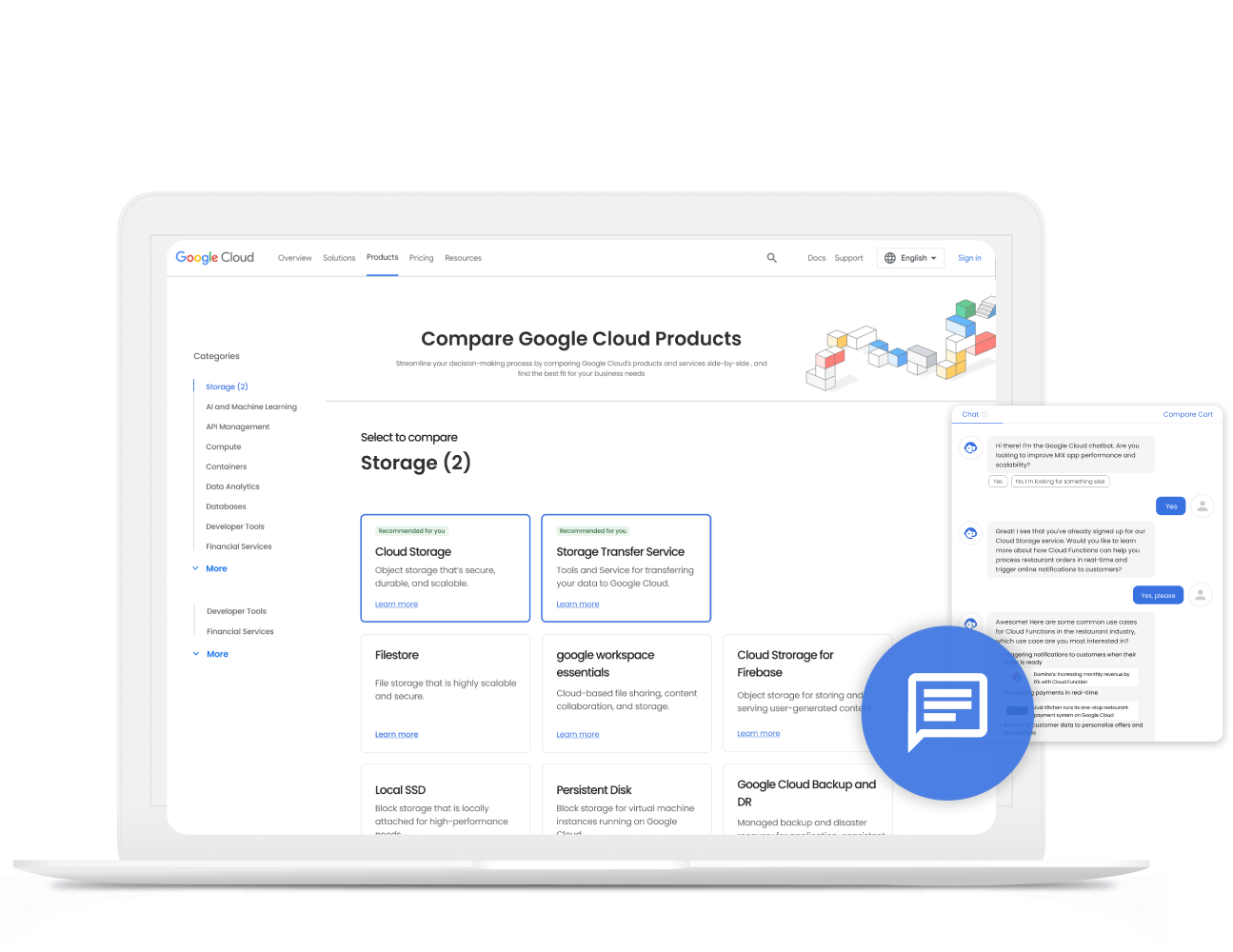
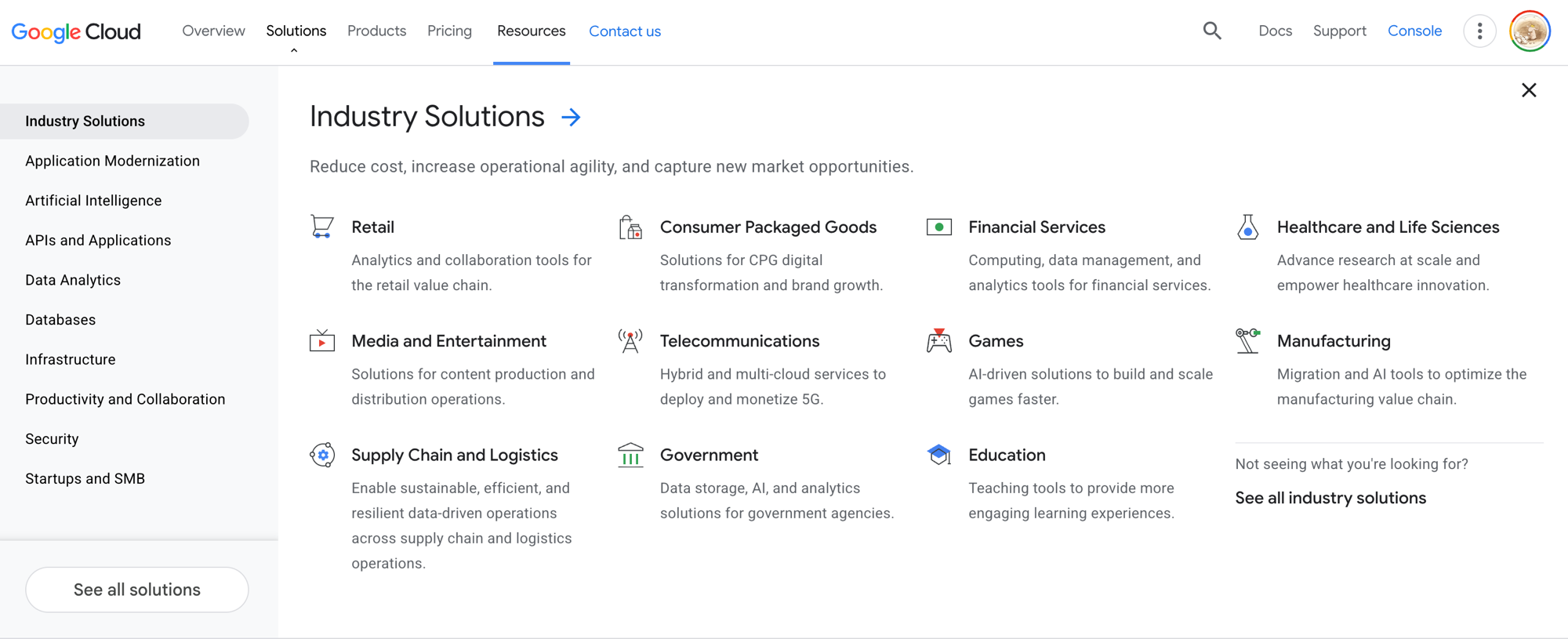
Google Cloud offers 100+ products with different pricing, integrations, and capabilities. Startup leaders struggle to find the right solution without clear guidance. The challenge was to help customers differentiate between similar offerings and discover solutions aligned with their business objectives.
Problem Statement
"When startup consumers search for solutions that align with their business objectives, how might Google Cloud assist them in differentiating between similar offerings on the platform?"
Research Questions
Understand
What mental models do startup leaders use when evaluating cloud solutions to purchase?
Identify
What are the UX gaps between Google and competitors in supporting cloud solution discovery?
Compare
What cognitive biases and trust mechanisms influence digital product purchase decisions?
The Deliverables: 0→1 Prototypes
Back in 2023 Q3, Google Cloud didn't have a chatbot—everything in this project was new.
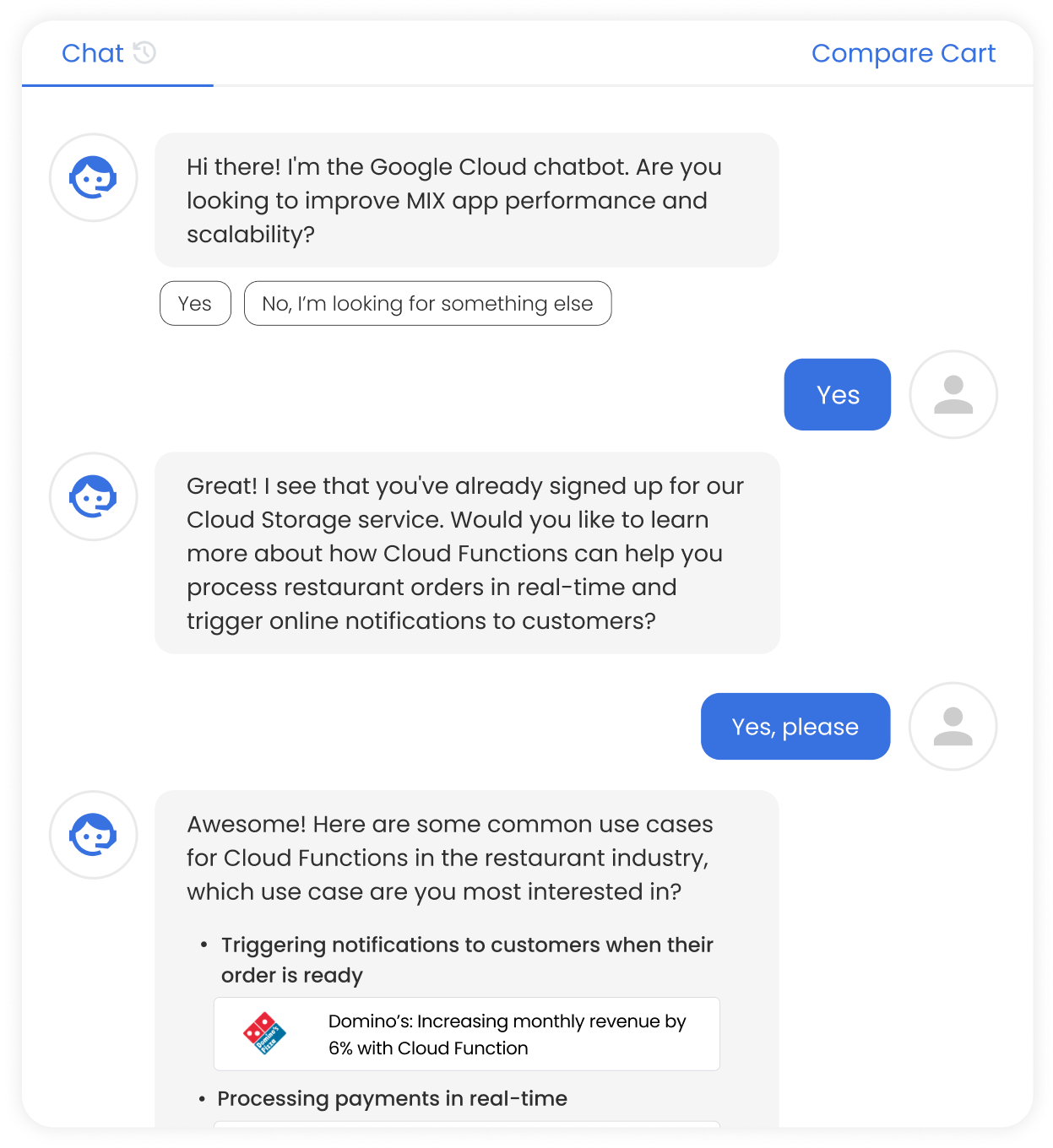
The chatbot enhanced discoverability by providing real-time, personalized recommendations based on user needs. It guides users through complex solution comparisons without requiring them to navigate multiple pages.
Research Methodology
Semi-Structured Interviews (N=8)
Recruited startup CTOs, CEOs, and Founders as key decision-makers. In-depth interviews revealed mental models and decision-making processes that surveys couldn't capture.
Competitive Analysis
Analyzed AWS and Azure UX patterns for product discovery. Identified where Google Cloud could differentiate through AI-powered recommendations.
Literature Review
Researched decision-making psychology, online purchasing behavior, and AI trust mechanisms. Grounded design decisions in behavioral science.
Key Insights
- Mental models: Leaders evaluate solutions through business fit, integration compatibility, and cost predictability—not feature lists
- Discovery friction: Comparing similar products requires switching between multiple pages and reading dense documentation
- Trust mechanisms: Clear product positioning and social proof (customer testimonials, case studies) drive adoption
- AI transparency: Users want to understand WHY an AI recommends something, not just receive the recommendation
Impact & Outcomes
Validated Hypothesis
Final prototype SUS score = 86.3% (excellent usability). Confirmed that helping users differentiate between similar solutions is critical to improving adoption.
Comprehensive Hand-offs
Delivered raw data, interview protocols, coded insights, and ongoing participant connections to support future research and implementation.
Driving Implementation
6 Google executives expressed strong interest across 2 presentation rounds. Chatbot feature is now being implemented on the Google Cloud website.
Key Learnings
- When designing AI features, transparency matters more than perfection
- Real user interviews with decision-makers reveal constraints that analytics never show
- Prototypes are powerful tools for stakeholder alignment and executive buy-in
- Tight timelines with small, focused teams can produce research-driven, high-quality prototypes
For detailed prototypes, interactive demos, and full research documentation, visit the complete project page.