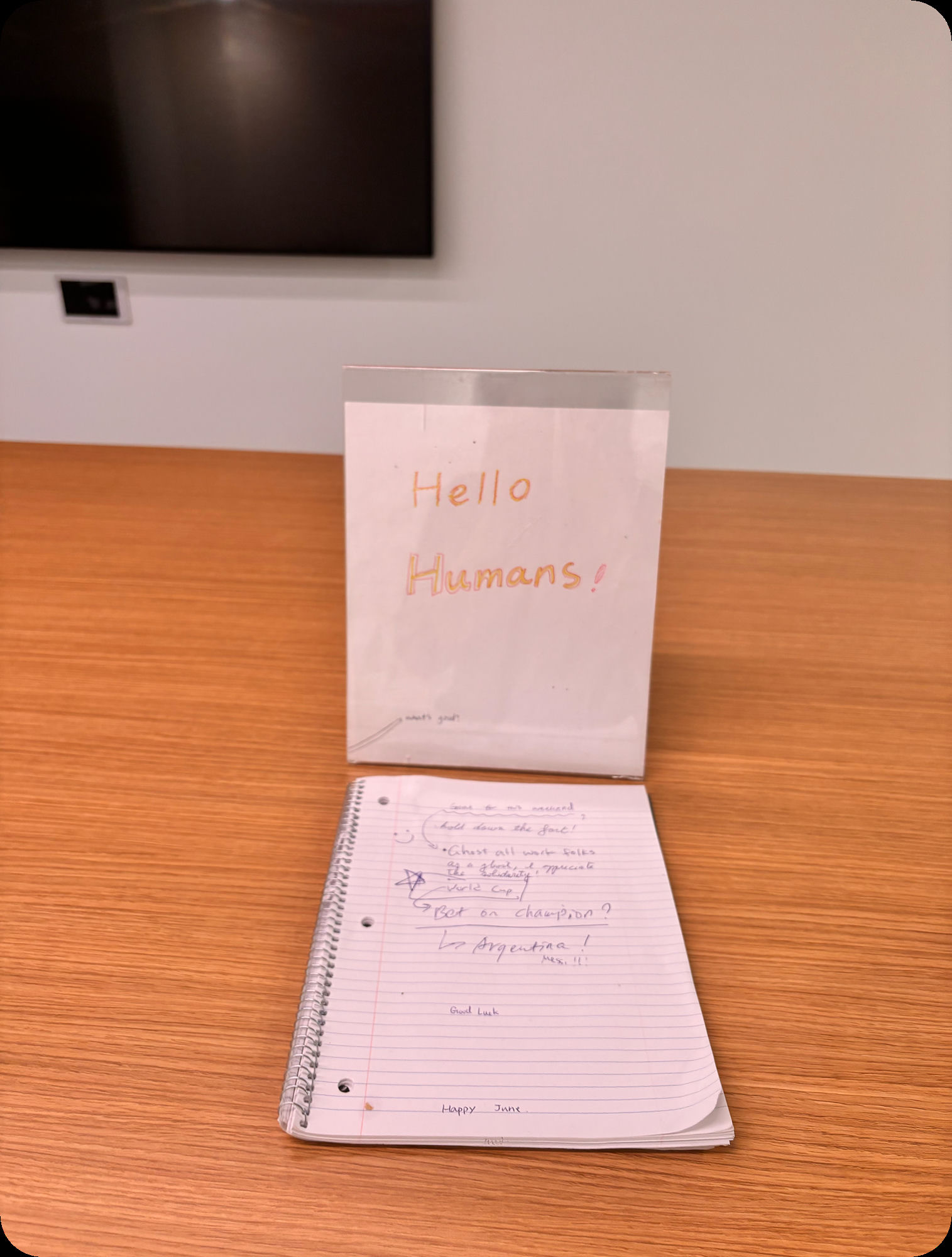
The notebook
A stand with an open notebook, left in a shared area. Sometimes I started with a prompt — a question, a half-finished thought. Sometimes I left it blank and let people surprise me. The hypothesis: if you make the barrier to interact low enough (pen, paper, no account), people will actually use it.
The notebook stand. A deliberately low-fi object — no digital layer, no notifications, no record of who wrote what.
What it could test
Whether async & anonymous interaction in a physical shared space could feel warm
What happened
People wrote only when there was a prompt!! Other times, they might treat it as a scratch paper with code notes lol. Some of those notes were really fun to read, some were jokes, some were genuine.
The insights (not proper research though)
It's good to make something organic, but there should also be some minimal instructions of what to do with it.
Hello Humans 2.0
One day I just wanna see what would happen if I make it a "paper exchange" station. I grabbed an empty tissue box and put a sticky notes with simple sign: take one, leave one.
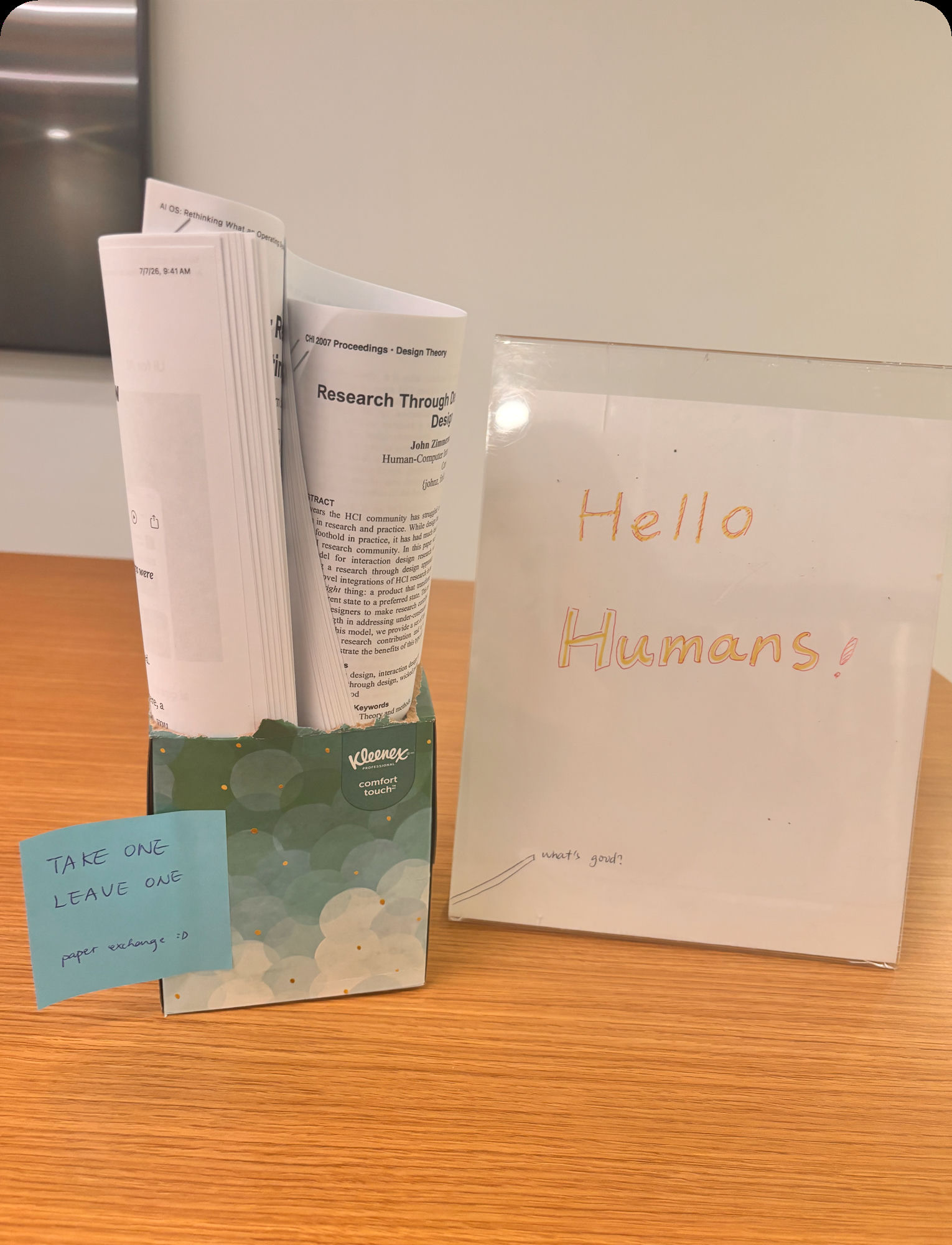
The paper exchange. A self-sustaining loop — the object replenishes itself through participation.
What it could test
Hypothesis: People are more likely to interact when there's reciprocity built in, and innovation needs to be a group work.
What happened
Well... they took mine but didn't leave any.
The insight (again don't quote me)
It could be because printing takes effort lol
Prototypes don't have to be digital
Prototypes are just a medium to test something new, so they can take any format. Here I thought I was doing it for fun — but it generated real behavioral data from real humans. And, most importantly, it makes work fun :)